
Did CBP Seize Your Device at the Border? Tell Us What Happened
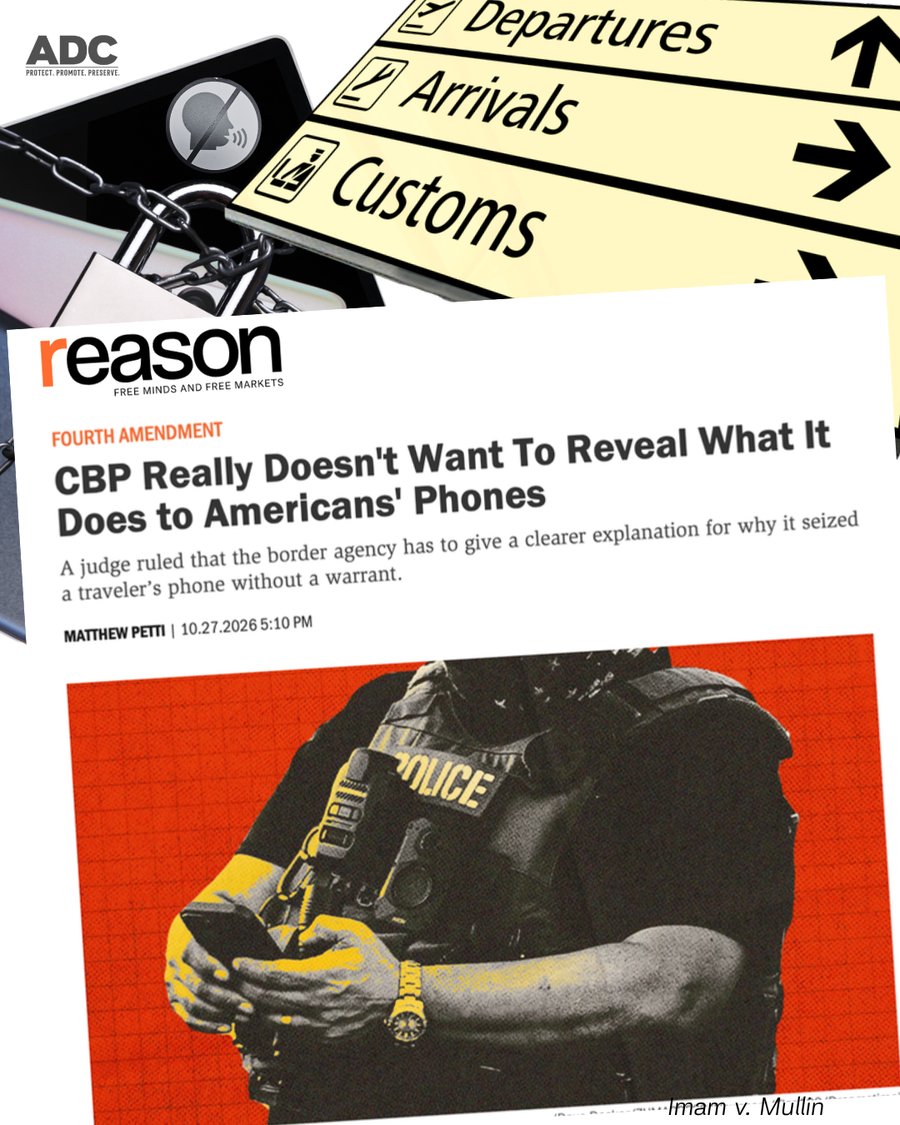
U.S. Customs and Border Protection (CBP) is increasingly using its border-search authority to seize travelers’ phones, laptops and other electronic devices, including from people who decline to unlock them. Border officers have broad search powers, but those powers are not unlimited, and they do not include confiscating personal property or coercing travelers into giving up their constitutional protections.
Has this happened to you?
If CBP or another federal agency seized your phone, laptop or other device at an airport, land border or other port of entry, we want to hear from you. Your account goes to ADC’s legal team and helps us document what is happening and identify cases we can take on.
Submitting this form or being contacted by ADC does not guarantee that ADC will provide legal representation.
ADC is fighting back in federal court
- Imam v. Mullin — On October 16, CBP seized four devices from a family returning to Dulles Airport. Muhammad Numaan Imam, a psychiatric nurse practitioner, declined to unlock his phone because it held confidential patient information. ADC filed an emergency motion on October 20, and the devices were returned as the court ordered discovery into CBP’s actions.
- Shehadeh v. Mullin — In September, CBP seized Palestinian American attorney Jalal Shehadeh’s phone at Newark Airport despite the privileged attorney-client communications on it. His phone was returned following ADC’s legal challenge.
- Blumenthal v. Mullin — This summer, CBP seized journalist Max Blumenthal’s phones at Dulles Airport. His phones were returned, and the court authorized discovery into CBP’s actions, allowing the case to move forward.
- Supreme Court amicus brief — ADC urged the Supreme Court to set clear constitutional limits on border searches of electronic devices.
We have heard from many travelers who faced similar treatment, and we do not have the resources to take every case to court. Your support allows us to keep taking on these cases and push back against CBP’s abuse of its authority.
Contributions are made to ADC Research Institute, a 501(c)(3) organization, and are tax-deductible to the extent permitted by law.
Recent Posts
Action Alerts

Your support means everything. Your gift protects rights, builds community, and fights hate. Let’s move forward together.